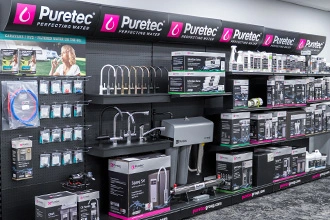
Rainwater collection is a great practice and becoming increasingly popular. However, it’s essential that water is collected and stored correctly and then maintained regularly so that it’s fit for consumption. The following sections of this guide will provide some advice on how to ensure your water is pure and safe to use. Click here to see recommended Rainwater Filter products for keeping your rainwater safe and purified.
1.
Evaluate Your Rainwater Collection Demographics
The catchment area directly affects the quality of rainwater that is collected so it is important to evaluate your needs, whether fixing an existing system or a new build. Once you have evaluated the catchment area, you’ll have a good idea of what products you’ll need to design a system. This section will help you make these selections.
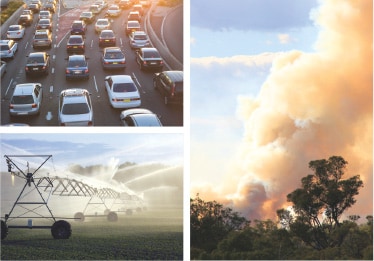
Rainwater itself is extremely pure, however in the collection process it gets contaminated with airborne particles or anything on your roof, gutters, and the water tank itself. So the quality of your rainwater is greatly affected by the general surroundings, demographics, climate and of course, the rainwater collection system itself.
Rainwater is also normally slightly acidic meaning that a lot of things it comes in contact with tend to travel on with it. And once the water is in the tank there is further opportunity for contamination which needs to be minimised. Thus it’s important to do everything you can to ensure your water is clean from the initial collection and storage, to when the water is consumed.
Different Tank Types
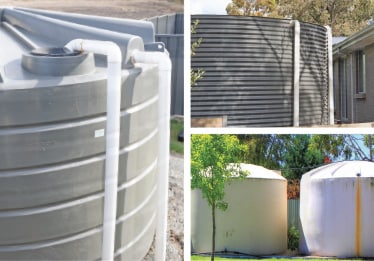
The type of material your tank is made of can greatly affect the quality of water whilst stored in it.
- Plastic tanks - these are the most common, and tend to be very good, as plastic doesn’t rust, however they often will give the water a plastic taste which a taste & odour filter will remove.
- Galvanised steel tanks - These are susceptible to rust so there is the possibility of rust flakes getting into the water, this can be easily removed with a sediment removal filter.
- Concrete tanks - Concrete contains limestone which can help to neutralise the naturally acid nature of rainwater which is helpful, the only tradeoff is that sometimes this causes a white spotting from water hardness.
Existing Tank Installations
If you already have tanks installed at your property its a good idea to comprehensively check the system to ensure its up to scratch.
- Check your gutters and downpipes feeding the tanks, ensuring that they are clean and in good condition.
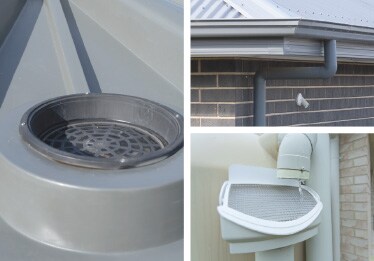
- Ensure the necessary screens are in place. Take preventative measures to ensure leaf litter and debris stay out of the tank. Leaves and debris can cause discolouration, odour and enable the production of microorganisms. Use a leaf litter guard in areas with overhanging trees.
- Check that direct sunlight can not enter the tank.Light encourages the growth of bacteria and algae, ensure your tank’s opening and inlets are covered properly to prevent sunlight from entering the tank.
- Check the tank itself for structural integrity, deterioration such as rust or cracks.
The surrounding environment
The surroundings and demographics of where the tank is situated will affect the quality of rainwater.
- Chemicals from crop dusters and sprayers overspray, these can be removed with a chemical removal/ carbon filter.
- Dust from farming activities.
- Wildlife, vermin, bats, insects - ensure fine screens are in place on the tank and mesh on your gutters and that you install a
- Ash and soot from burning off can all affect the quality of water. A first flush diverter helps reduce the amount that gets into the tank with this, and a carbon filter can reduce it if it does get into the water. If you have a severe issue in your area, it’s best to call our water treatment team to discuss options.
- Tannins from tree leaves & branches.
Your Roof
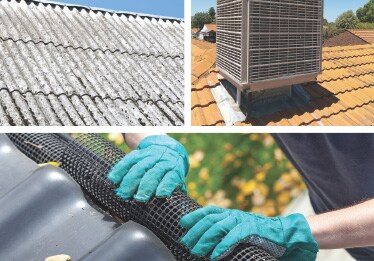
- Roofing is constructed with a range of different materials and it’s not uncommon for them to contain asbestos, lead flashing, paint and solder which are all capable of contaminating your water as they corrode, crack, flake, deteriorate from UV or leach chemicals. This can greatly compromise the quality of your rainwater.
- Do not allow roof mounted appliances such as air conditioners or hot water systems to discharge or overflow onto the catchment area or gutters.
- Prevent leaves, vegetation and pests from entering your tank with gutter mesh. This aids in reducing animal-borne contamination, sediment build-up and leached tannins.
- Check for lead flashings, typically around heater, as this could contaminate your water with lead which is harmful for your health.
2.
Designing A Household Rainwater System
Save money and enjoy peace of mind, by selecting the right water system for your family and ensuring safe and pure water. Take the time to assess which areas of your property that you’ll want or need to use clean water. Determining your budget is also something that will assist you when making your decisions.
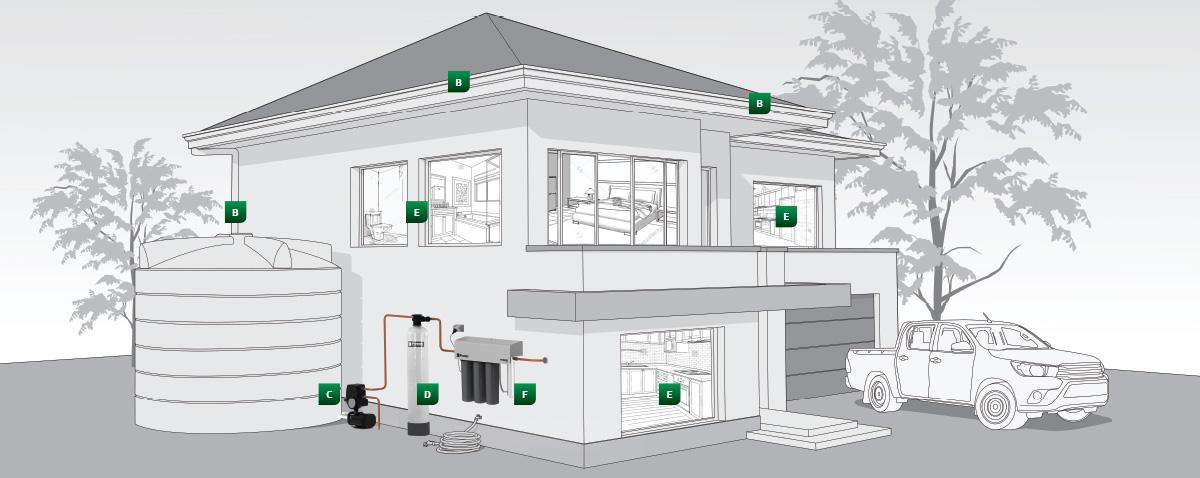
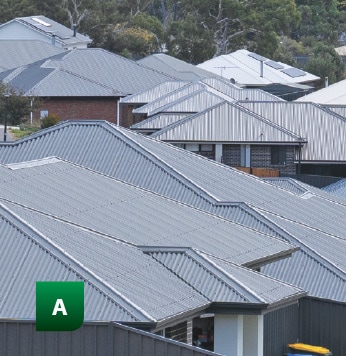 A. Maximize your catchment area to get the most rainwater as possible using the cleanest sections of your roof away from trees, vegetation, etc.
 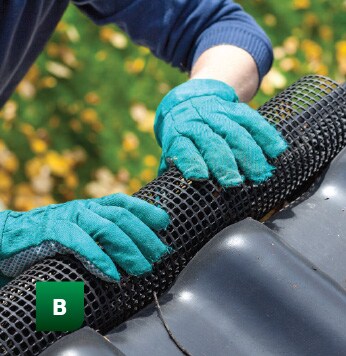 B. Install gutter mesh over your gutters to prevent leaves, vegetation and pests out of your system. Also, installing first flush diverter helps to capture and isolate the most contaminated rainwater from the first downpour. Ensure your tank is sealed, don’t allow sunlight and have mesh screens in place.
 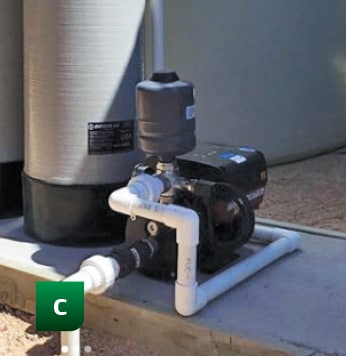 C. Select a suitable pressure pump to ensure you have good pressure where the water is being used. You’ll need a minimum pressure of 300kPa.
 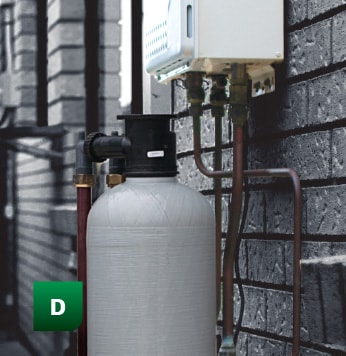 D. (Optional) Rainwater is often acidic which reacts with copper pipes causing blue-green staining. Installing Puretec NTS Series water treatment system will help fix and correct the pH (acidity) of your rainwater.
 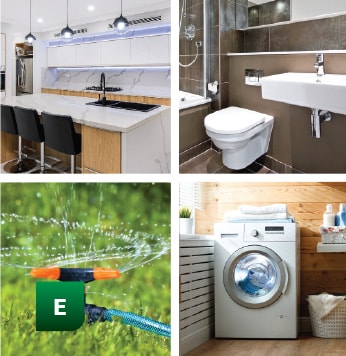 E. Which areas of the house you need to supply ie., kitchen, bathroom, laundry, garden, garage, etc. If you are only supplying toilets, consider just a stand-alone filter unit. For showering and drinking, we recommend a system that kills bacteria.
 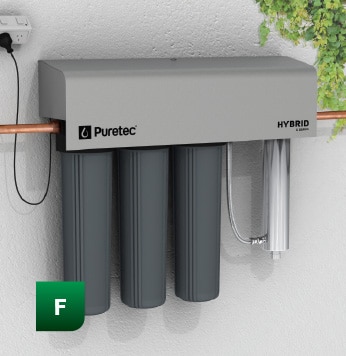 F. Select a suitable filtration system. The Hybrid series incorporates Radfire UV technology that kills 99.9% of bacteria. It’s a natural purification process that is eco-friendly and chemical-free. The Hybrid G series incorporates a weather cover that can be installed outdoors. The Hybrid R series is designed for indoor installations. See the recommended products at the bottom of the page.
A. Maximize your catchment area to get the most rainwater as possible using the cleanest sections of your roof away from trees, vegetation, etc.
B. Install gutter mesh over your gutters to prevent leaves, vegetation and pests out of your system. Also, installing first flush diverter helps to capture and isolate the most contaminated rainwater from the first downpour. Ensure your tank is sealed, don’t allow sunlight and have mesh screens in place.
C. Select a suitable pressure pump to ensure you have good pressure where the water is being used. You’ll need a minimum pressure of 300kPa.
D. (Optional) Rainwater is often acidic which reacts with copper pipes causing blue-green staining. Installing Puretec NTS Series water treatment system will help fix and correct the pH (acidity) of your rainwater.
E. Which areas of the house you need to supply ie., kitchen, bathroom, laundry, garden, garage, etc. If you are only supplying toilets, consider just a stand-alone filter unit. For showering and drinking, we recommend a system that kills bacteria.
ELIMINATE THE RISK OF BACTERIA!
F. Select a suitable filtration system. The Hybrid series incorporates Radfire UV technology that kills 99.9% of bacteria. It’s a natural purification process that is eco-friendly and chemical-free. The Hybrid G series incorporates a weather cover that can be installed outdoors. The Hybrid R series is designed for indoor installations. See the recommended products at the bottom of the page.
3.
Monitoring and Maintenance
Monitoring and maintaining your rainwater system is essential in ensuring safe water for all uses around the home, most especially for drinking water. While preventative measures can be implemented during design and installation, it’s just as important to upkeep those measures. In the case of rainwater risk management, prevention is key to ensuring safe, high quality water. This section will help you determine and attend to any problematic issues that may impact your rainwater supply.
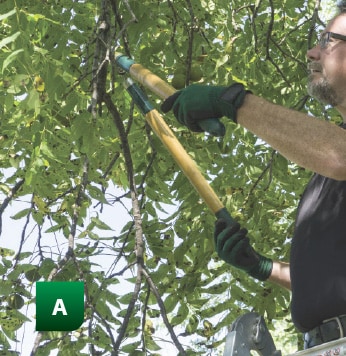 A. Trimming Trees/ Removing Vegetation
Keeping your roof catchment area clear of overhanging trees will help to prevent leaves and foliage collection. Cut back trees to remove dropping or dying leaves, and trim away branches that could be potential roosting points for birds or provide access for small animals and unwanted visitors. 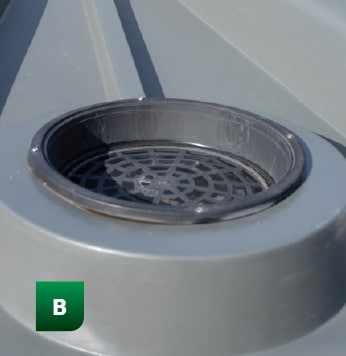 B. Prevent Debris In Your Tank
Use leaf & rubbish diverters to protect inlets to rainwater tanks. Keep foliage and debris clear from your pipes to avoid clogging, blockages, rotting leaves and tannin leaching. To prevent entry of mosquitoes, insects and vermin, install a 1 mm mesh on inlet strainer and overflow. Finally, reduce the risk of flooding eaves by taking precautions to stop downpipe blockages and back flow. 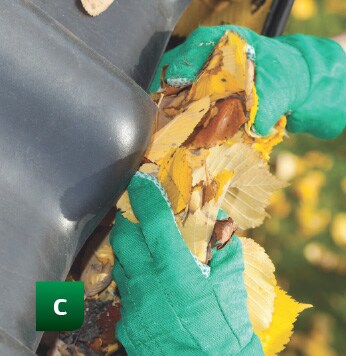 C. Keeping Gutters Clean
Debris, leaves, moss and lichen should be kept clear from gutters. Gutter mesh is a simple way to avoid this and can be installed to keep vegetation and pests out. This can also reduce the risk of animal-borne contamination, leached tannins and sediment build up. Inspection and maintenance of roofing and gutters should occur every 6 months. 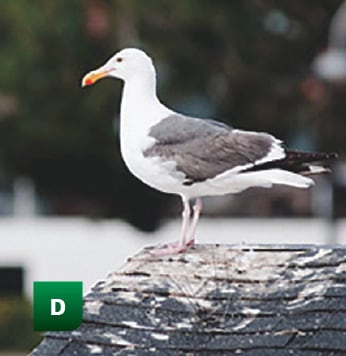 D. Keep Vermin and Pests Away
Take precautions to deter small animals and birds away from entering the tank. Ensure barriers such as mesh are installed to keep vermin out. Remove roosting places on your roof so that you don’t get too much bird poo. Keep in mind sometimes animals can be trapped and drown in tanks and can cause very high levels of contamination, so best to be vigilant. 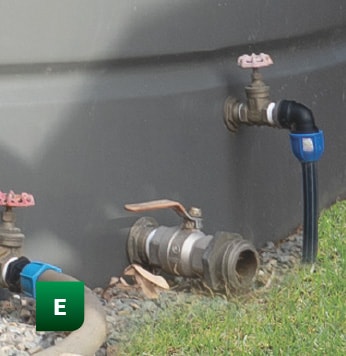 E. Clean regularly
Examine tanks for accumulated sludge on the floor of the tank at least every 2 years. Sludge can be removed by completely emptying and rinsing the tank or via siphoning. There may even be tank cleaners who work in your area. Be aware that excessive sludge can harbour bacteria. 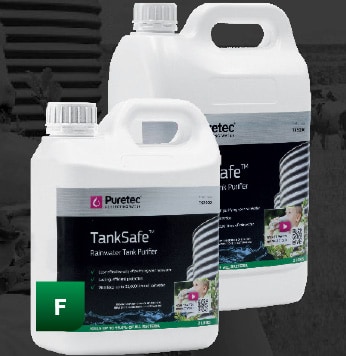 F. Regular Flushing with TankSafe™
Regular flushing of your water system will keep your tank and water line from any build-up of sediment, algae and unwanted elements. If you have a Hybrid UV system installed, we recommend dosing the system with TankSafe at least once a year. If no UV is installed, this should be done every 2 months. 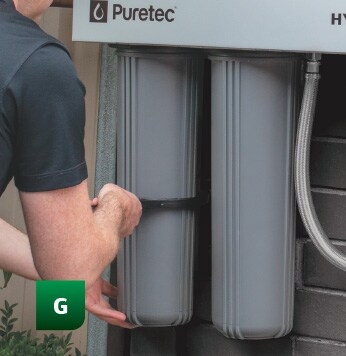 G. Filter System Maintenance
Using a filtration system for your rainwater is a simple way to enjoy peace of mind. However, if you’re not changing your filters and lamps regularly they may not be doing their job effectively. Many filters have pores or media which trap or attract bacteria and contaminants. Once your filter is full of contaminants water will struggle to get through and what does may not be filtered effectively. If you are using an ultraviolet system, the lamp also needs to be replaced every 12 months to guarantee effectiveness. For more information or contact our Customer Care Team for further assistance.
A. Trimming Trees/ Removing Vegetation
Keeping your roof catchment area clear of overhanging trees will help to prevent leaves and foliage collection. Cut back trees to remove dropping or dying leaves, and trim away branches that could be potential roosting points for birds or provide access for small animals and unwanted visitors.
B. Prevent Debris In Your Tank
Use leaf & rubbish diverters to protect inlets to rainwater tanks. Keep foliage and debris clear from your pipes to avoid clogging, blockages, rotting leaves and tannin leaching. To prevent entry of mosquitoes, insects and vermin, install a 1 mm mesh on inlet strainer and overflow. Finally, reduce the risk of flooding eaves by taking precautions to stop downpipe blockages and back flow.
C. Keeping Gutters Clean
Debris, leaves, moss and lichen should be kept clear from gutters. Gutter mesh is a simple way to avoid this and can be installed to keep vegetation and pests out. This can also reduce the risk of animal-borne contamination, leached tannins and sediment build up. Inspection and maintenance of roofing and gutters should occur every 6 months.
D. Keep Vermin and Pests Away
Take precautions to deter small animals and birds away from entering the tank. Ensure barriers such as mesh are installed to keep vermin out. Remove roosting places on your roof so that you don’t get too much bird poo. Keep in mind sometimes animals can be trapped and drown in tanks and can cause very high levels of contamination, so best to be vigilant.
E. Clean regularly
Examine tanks for accumulated sludge on the floor of the tank at least every 2 years. Sludge can be removed by completely emptying and rinsing the tank or via siphoning. There may even be tank cleaners who work in your area. Be aware that excessive sludge can harbour bacteria.
F. Regular Flushing with TankSafe™
Regular flushing of your water system will keep your tank and water line from any build-up of sediment, algae and unwanted elements. If you have a Hybrid UV system installed, we recommend dosing the system with TankSafe at least once a year. If no UV is installed, this should be done every 2 months.
G. Filter System Maintenance
Using a filtration system for your rainwater is a simple way to enjoy peace of mind. However, if you’re not changing your filters and lamps regularly they may not be doing their job effectively. Many filters have pores or media which trap or attract bacteria and contaminants. Once your filter is full of contaminants water will struggle to get through and what does may not be filtered effectively. If you are using an ultraviolet system, the lamp also needs to be replaced every 12 months to guarantee effectiveness. For more information or contact our Customer Care Team for further assistance.
Click here to see recommended Rainwater Filter products
If you have any more questions regarding your rainwater filtration or to know more about the rainwater filtration product range, please contact us.